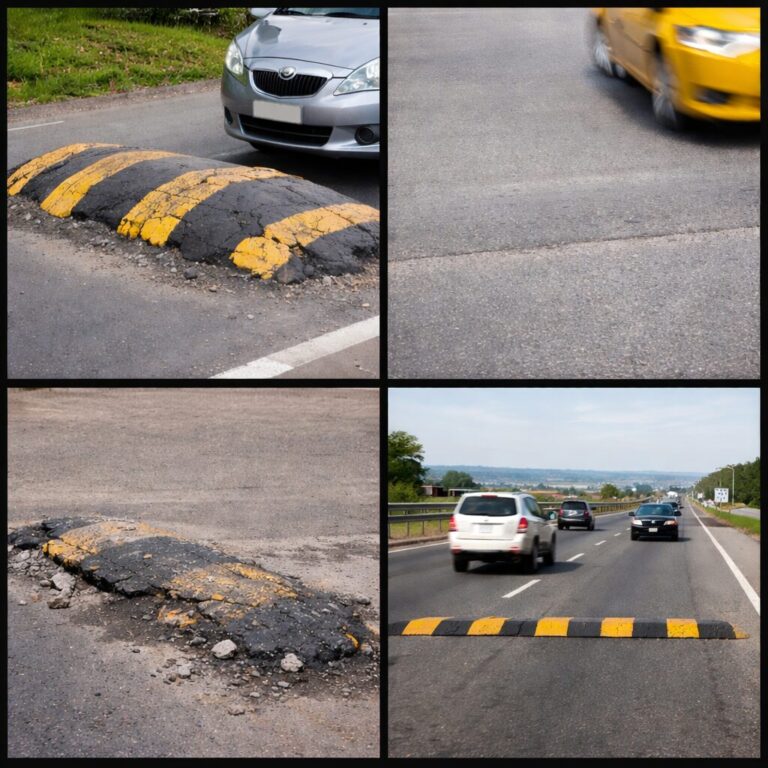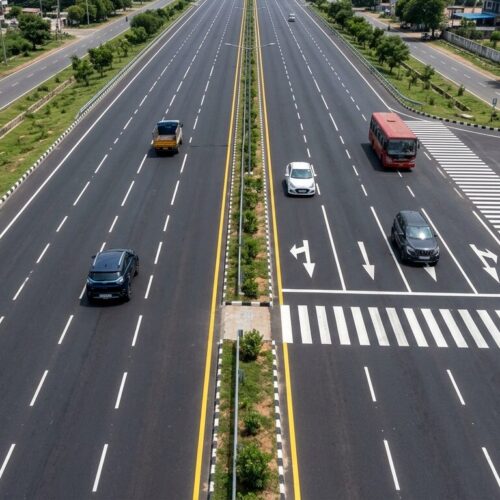
We love reading between the lines. On Indian roads, most times the lines don’t exist, are barely visible, or when they do, we don’t even see the ones in plain sight.
India has over 6.4 million kilometres of roads,the second-largest network in the world. But how many of those kilometres are clearly lane-marked, consistently maintained, and visible year-round? There is no consolidated national figure. That alone says something about how we treat one of the most basic safety systems on our roads.
And even where the paint exists, we ignore it.
A 2019 survey by the SaveLIFE Foundation found that fewer than 30 percent of Indian drivers could correctly identify common road markings.
The lines are there. The meaning isn’t getting through.
India’s road markings follow IRC:35, the Indian Roads Congress code that governs where lines go, what colours mean, and how wide each stripe should be. Taken together, they form a coherent system designed to reduce conflict between vehicles, pedestrians, and cyclists.
Here are the nine most important ones, grouped by what they actually do.
1. Lane Management Markings
These markings organise traffic moving in the same direction and define road boundaries.
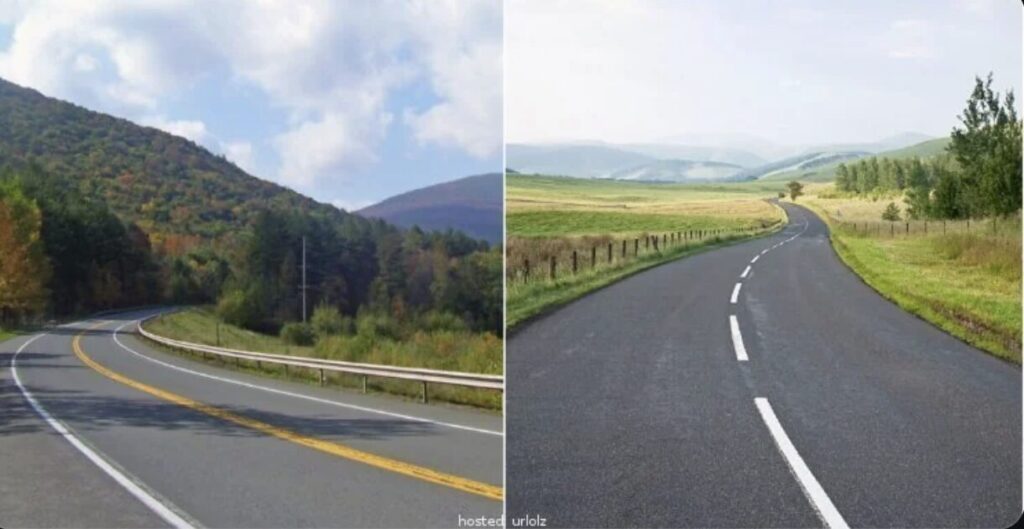
Broken White Line – You May Overtake or Change Lanes
The most common marking on Indian roads. Painted as 3-metre dashes with 9-metre gaps, broken white lines divide lanes moving in the same direction. You are allowed to cross them to change lanes or overtake, as long as it is safe to do so.
When the dashes appear closer together, they act as a warning that the road ahead is about to change. A junction is coming, or a lane is ending.
IRC:35 Specification — Standard broken white line: 3m dash, 9m gap, 150mm wide. On curves and near junctions, the gap reduces to 3m for higher visibility.
What to do: Before crossing, check mirrors, signal your intention, verify no solid line ahead, and ensure there’s a clear gap in traffic. The broken line gives permission, not a guarantee of safety.
Solid White Line – Do Not Cross
A continuous white line means overtaking is not permitted. It appears wherever sight distance ahead is too short for a safe manoeuvre near a blind bend, the crest of a hill, or approaching a busy junction.
It also marks the edge of a carriageway and the boundary at pedestrian crossings. Context matters: a solid white at the road’s edge is an edge marker telling you where the road ends. A solid white along the centre is a no-overtaking instruction.
What to do: Stay in your lane. If you’re approaching a solid white centre line from a broken white section, complete your overtaking manoeuvre before the line becomes solid. Don’t start one.
2. Overtaking Control Markings
These markings regulate overtaking on two-way roads.
Single Solid Yellow Line – Restricted Overtaking
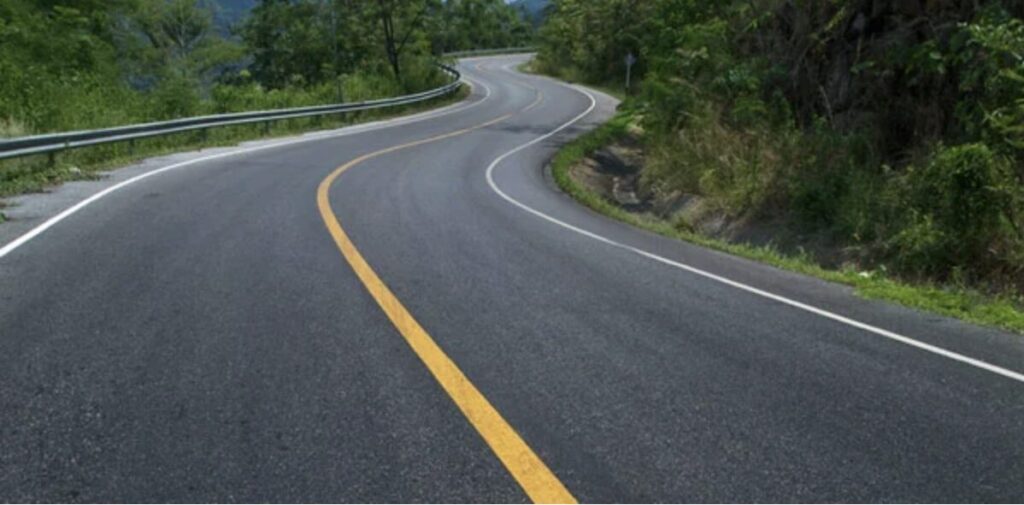
Yellow carries a stricter message than white. Under IRC:35, a single solid yellow centre line means the side of the road nearest to the line must not cross or overtake. You find it near railway level crossings, sharp curves, and hilltops.
If there is a broken yellow line alongside the solid yellow, the side nearest the broken line may overtake when safe. The solid-line side still cannot.
Colour rule — White lines govern lane separation and edge boundaries. Yellow is used only for centre lines on two-way roads where overtaking restrictions are in force.
What to do: If you’re on the solid yellow side, stay behind slower traffic even if the opposite side has a broken line. The restriction is directional and absolute for your side.
Double Solid Yellow Lines – Absolute Prohibition
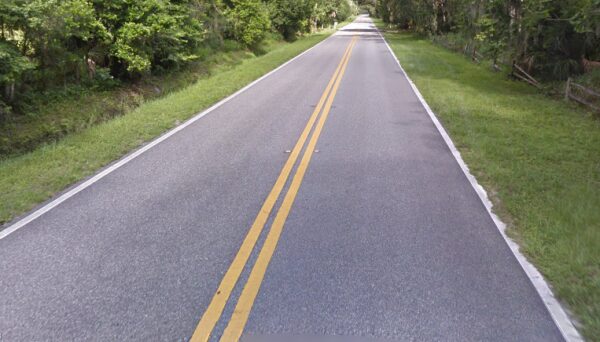
Two parallel solid yellow lines are the strongest centre-line restriction on Indian roads. No vehicle from either direction may cross or overtake. On mountain highways through the Western Ghats or the roads approaching Manali, these lines sit above sheer drops of several hundred feet.
Two yellow lines is the road’s version of a hard stop. It is not painted there lightly.
What to do: Do not cross under any circumstances. Not for slow vehicles, not for what looks like a clear stretch, not even if other drivers are doing it. The penalty for getting it wrong on a ghat road isn’t a fine — it’s physics.
3. Restricted Zones and Separation Areas
These markings define areas you are not supposed to enter.
Chevron and Hatched Markings – Stay Out
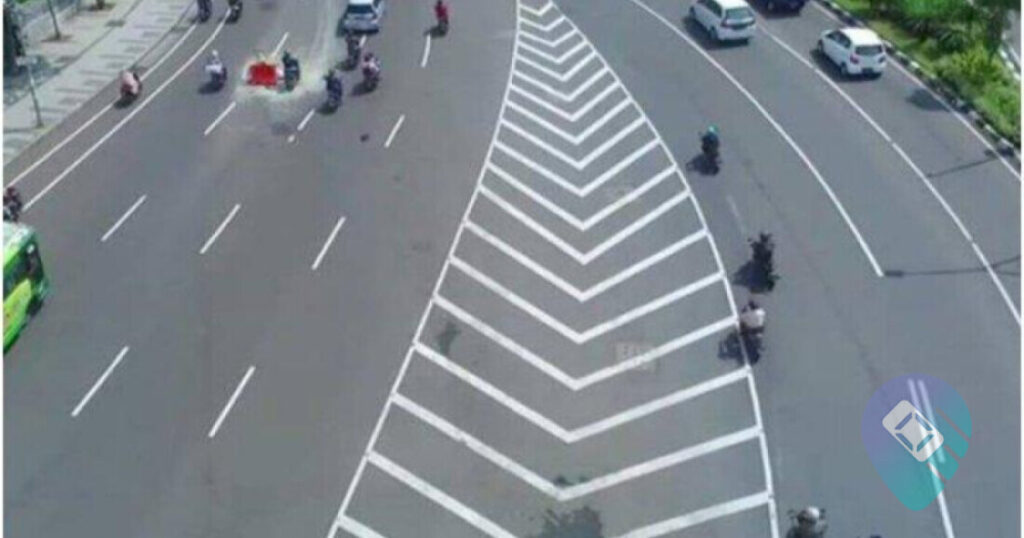
Angled or V-shaped patterns mark areas that are off-limits. They appear at the nose of a lane separation before a toll plaza, at highway exits, beside traffic islands, and ahead of any point where the road narrows or splits.
Where hatched diagonal lines fill the space between lanes, the area is entirely out of bounds. Driving on it is illegal and often physically hazardous since the painted area frequently sits on a raised kerb.
Maintenance note — Thermoplastic paint, which NHAI now uses on expressways, lasts 2 to 3 years compared to a few months for ordinary paint. If you’re seeing crisp chevrons, you’re likely on a recently maintained highway.
What to do: Treat chevron areas as if they don’t exist as drivable surface. Don’t use them to undertake slow traffic, don’t cut across them to save time at exits, and don’t assume they’re safe just because they’re painted.
Yellow Box Junction – Keep It Clear
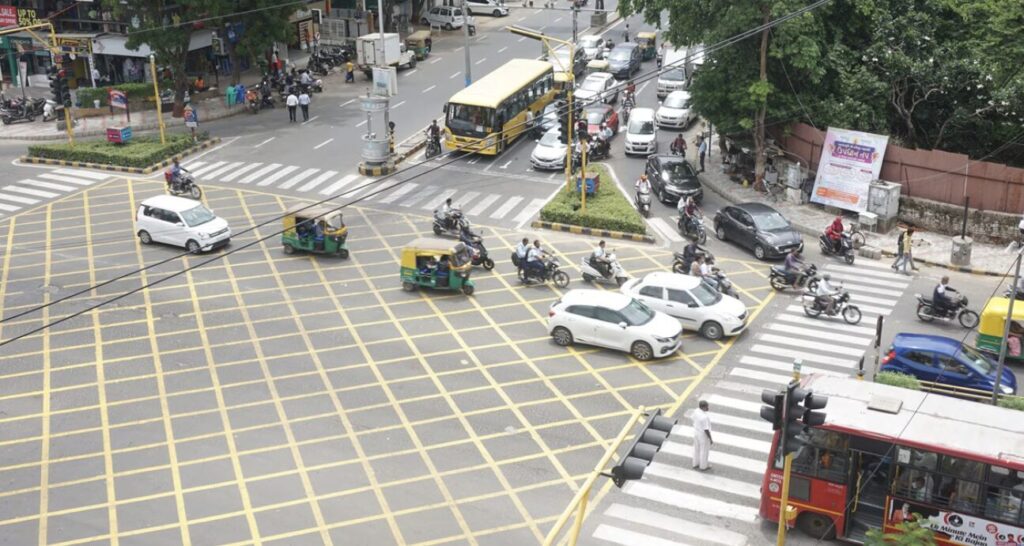
A yellow grid painted at a busy intersection. Do not enter unless you can exit it. The marking prevents vehicles from blocking the junction during a signal change, which creates gridlock that radiates outward across entire neighbourhoods.
Yellow box junctions are in use at high-intensity intersections in Mumbai, Delhi, Bengaluru, and Chennai. Where traffic police enforce them, they work. Where there is no enforcement, drivers enter freely and the box becomes the cause of the problem it was designed to prevent.
The rule in one line — Enter only if you can see a clear exit on the other side. If you would have to stop inside the box, wait before the line until space opens up.
What to do: Before entering a yellow box, look beyond it. Can you see clear road on the far side? If the traffic ahead is stopped or crawling and you’d end up stuck inside the box when the light changes, wait. You’re not losing time — you’re preventing gridlock.
4. Intersection Control and Priority Markings
These markings define right of way.
Stop Line – Where You Actually Stop
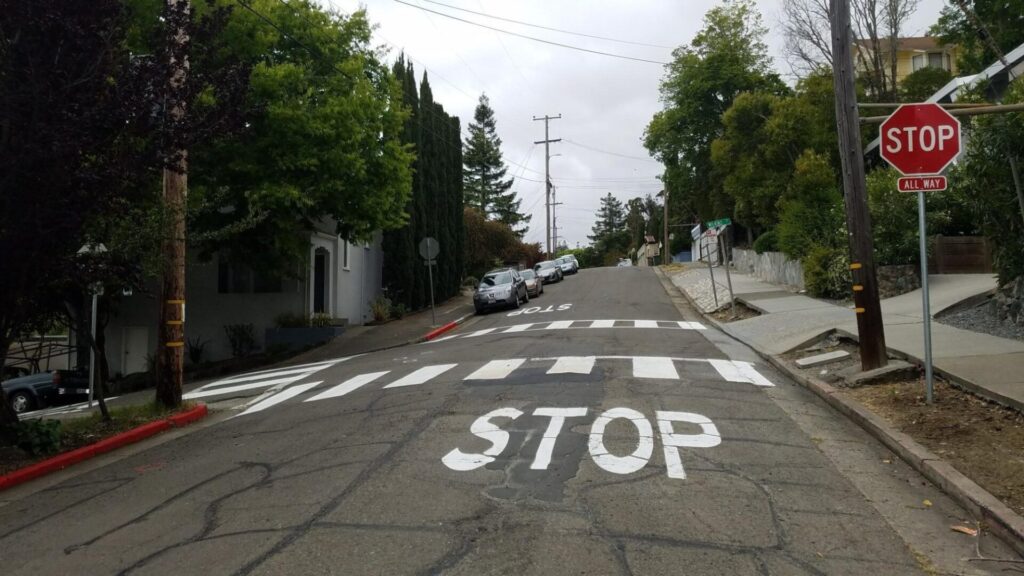
A thick white line at a traffic signal or pedestrian crossing. Stop here, not a metre past it. Stopping beyond the line puts a vehicle in the path of pedestrians who have legal right of way and into the sightlines of crossing traffic. It is one of the primary causes of intersection accidents in Indian cities.
Advanced stop lines — Cities including Pune and Bengaluru are trialling a second stop line set back from the main one, for cyclists only. The gap gives bike riders a head start before motor vehicles move, reducing the risk of being caught in a turning truck’s blind spot.
What to do: Stop with your front bumper behind the line, not on it. If you’ve crept forward during a long red light, reverse if safe to do so. Pedestrians stepping onto a zebra crossing have absolute right of way under the Motor Vehicles Act.
Zebra Crossing – Pedestrians Have Priority
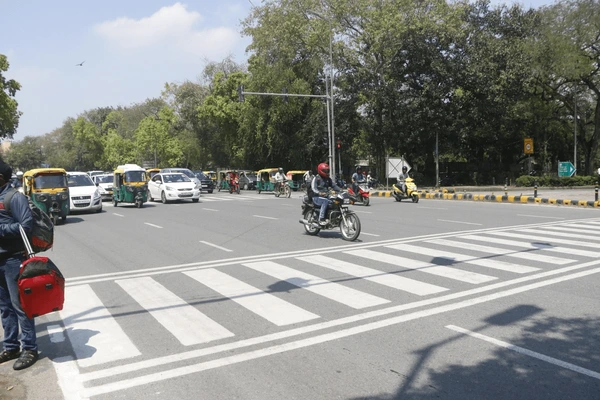
Parallel white stripes across the road. Under the Motor Vehicles Act, any vehicle approaching must stop for a pedestrian who has stepped onto the crossing or is clearly about to.
Where enforcement is active, the crossings work. Where it is absent, the stripes are largely decorative. Rajkot and Surat have experimented with 3D optical illusion paint — stripes that appear to rise off the road — with encouraging short-term results, though the novelty effect fades.
A zebra crossing is only as effective as the drivers who acknowledge it. The paint creates the legal obligation. The compliance has to come from somewhere else.
What to do: As you approach a zebra crossing, scan for pedestrians waiting at the kerb or already crossing. If someone has stepped onto the crossing or is clearly about to, stop completely. Slowing down while they run across isn’t compliance — it’s intimidation.
Quick Reference: Markings by Function
Lane Management → Broken white line (you may change lanes) → Solid white line (stay in your lane)
Overtaking Control → Single solid yellow (one side restricted) → Double solid yellow (both sides prohibited)
Restricted Zones → Chevrons and hatched areas (stay out entirely) → Yellow box junction (don’t enter unless exit is clear)
Intersection Control → Stop line (full stop required) → Give way line (yield to traffic, stop only if needed) → Zebra crossing (pedestrians have absolute priority)
Why Enforcement Matters More Than Paint
The Motor Vehicles (Amendment) Act of 2019 introduced stiffer penalties and mandated technology-based enforcement. NHAI has been rolling out thermoplastic markings that survive multiple monsoons. Both are necessary steps.
But paint alone doesn’t change behaviour.
At Attento, we’ve observed that even drivers who understand what markings mean often violate them when they believe enforcement is absent. The SaveLIFE Foundation survey showed that fewer than 30% of drivers could identify markings — but behaviour studies suggest that knowledge isn’t the only gap. Compliance is.
Real behaviour change requires both education and accountability. That’s why platforms tracking lane discipline, overtaking patterns, and adherence to marked restrictions can help drivers understand their actual road behaviour, not just their intended behaviour.
Technology-enabled monitoring doesn’t replace enforcement. It makes it scalable. And on a road network of 6.4 million kilometres, scale is what we lack.
Why This Matters
These nine markings form a coherent system that allows millions of people to share the same road without constant conflict. They’re not perfect — enforcement is patchy, maintenance is inconsistent, and large stretches of rural highways have no markings at all.
But where they exist, they work. When followed.
Driving licence tests have historically done very little to assess knowledge of road markings. Most drivers learn by watching other drivers, which means errors propagate across generations. If the vehicle in front crosses a solid line, the assumption is it must be allowed.
The code is published. The specifications are clear. The legal framework exists. What’s missing is the transmission, getting the meaning of these lines from the IRC manual into the muscle memory of 30 crore licence holders.
Roads speak only to those who listen.
The lines are not suggestions. They are instructions.
And on roads where mistakes cost lives, ignoring them is a luxury we cannot afford.
You might also want to explore how these markings interact with other road signals drivers often miss. Our guide on dashboard warning lights explains how your car communicates danger long before a breakdown happens, while our piece on highway hypnosis explores how long, repetitive roads can quietly reduce driver awareness. If you’re interested in how vehicle safety itself has evolved, our deep dive into India’s crash-test revolution explains how safety ratings reshaped the country’s car market.
Understanding the road, the vehicle, and the driver together is what ultimately makes roads safer.