Why can German drivers legally reach 200 km/h on the Autobahn while Indian highways cap speeds at 120 km/h? The answer isn’t arbitrary. Speed limits reflect engineering science, road design, and enforcement capacity — and understanding how countries set them reveals why road safety outcomes vary so dramatically worldwide.
With India recording over 150,000 road deaths annually, and MoRTH data showing overspeeding cited in more than 70% of road crash fatalities, examining global speed limit practices offers crucial insights for improving India’s road safety policy.
The Engineering Science Behind Speed Limit Setting
Modern speed limits aren’t based on guesswork. Traffic engineers worldwide use standardized methodologies to determine safe speeds based on driver behavior, traffic flow analysis, crash data, and road conditions.
The 85th Percentile Rule
Most countries begin with the “85th percentile speed” also called V85 — the speed at or below which 85% of drivers naturally travel under normal conditions. Developed by the Institute of Transportation Engineers (ITE), this assumes that most drivers naturally choose a safe speed, so regulations should align with that instinct rather than fight it.
But data isn’t the only factor. Road geometry, visibility, population density, and accident history all shape the final number. That’s why a rural highway in Australia may legally allow 110 km/h, while a similar-looking road in the UK caps you at 70 mph (113 km/h).
Did You Know?
In the U.S., Montana once experimented with “reasonable and prudent” limits on rural highways. Drivers loved the freedom, but crashes spiked, and the state reinstated hard numbers by 1999 (IIHS).
The Process Of Setting Speed Limits
Speed limits are built on layered rationales:
- The Engineering Approach starts with the 85th percentile speed (V85), assuming that the speed at or below which 85% of drivers travel safely is a solid baseline, adjusted for roadside factors like pedestrian exposure or intersections.
- The Expert System Approach, such as the U.S.’s USLIMITS2, automates that process – factoring in development density, traffic counts, crash history, and more.
- The Safe System Approach flips the logic: it begins with human tolerance limits – how fast can someone survive a collision – and works backward to engineering design and speed limit, especially important in urban areas with vulnerable users (WHO).
How Different Countries Approach Highway Speed Limits
High-Speed Tolerance: Germany’s Autobahn
Only around 30% of the Autobahn network remains unrestricted. Elsewhere, limits of 120–130 km/h apply. This works because of:
- Rigorous driver training and licensing
- High vehicle safety standards
- Limited access design that excludes mixed traffic
- Consistent road maintenance
Despite higher speeds, Germany’s highway fatality rate is among the world’s lowest due to strict enforcement and homogeneous traffic.
Conservative Limits, Strict Enforcement: Nordic Countries
Sweden and Norway post lower highway limits (90–110 km/h) but achieve exceptional safety through:
- Automated speed enforcement
- High penalties for violations
- “Vision Zero” policies prioritizing safety over mobility
Result: Sweden’s road fatality rate is about 80% lower than India’s, per vehicle-kilometer traveled (OECD/ITF).
Developing Country Challenges
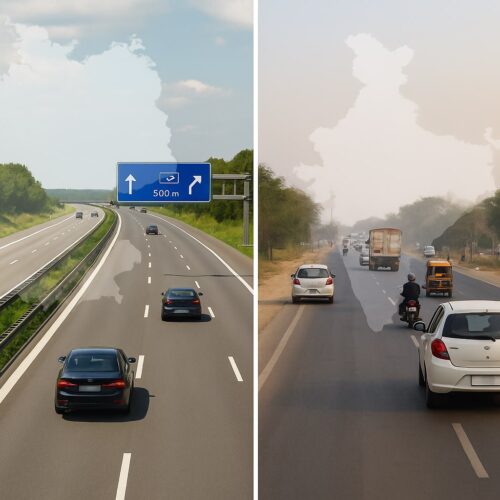
If India and Germany both build modern highways, why does one allow much lower limits while the other tolerates much higher speeds? The answer lies in safety culture and enforcement capacity.
In countries with weak enforcement and mixed traffic, posted limits are often conservative, knowing compliance will already be partial. In India’s heterogeneous traffic, where pedestrians, two-wheelers, tractors, and trucks share the same road, the logic of 85th percentile or V85 breaks down. Drivers’ “natural speed” reflects vehicle capability, not always safe conditions for vulnerable road users.
This helps explain why India’s 120 km/h expressway ceiling is lower than many developed countries with similar road designs.
India’s Speed Limit Framework and Local Challenges
India standardised speed limits under the Motor Vehicles (Amendment) Act, 2019. The Ministry of Road Transport and Highways (MoRTH) prescribed maximum speeds.
- Expressways: 120 km/h
- National highways: 100 km/h
- State highways: 90 km/h
- Urban roads: 60–70 km/h
States can lower these further based on local conditions.
Real-World Implementation
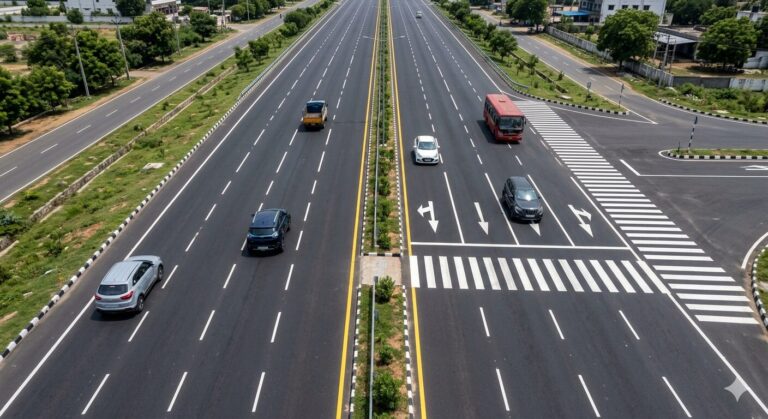
On paper, limits are clear. But the challenge remains enforcement and context. A six-lane highway cutting through Gurgaon may technically allow 100 km/h, but unmarked pedestrian crossings, auto-rickshaws, and roadside vendors mean actual safe speeds are much lower. Speed limits on paper don’t always reflect realities on the ground.
Recent efforts aim to bridge this gap:
- Institutions like IIT-Kharagpur are now conducting safe-speed audits—incorporating crash data, road geometry, and human injury thresholds—to guide speed-setting across UP and beyond.
- In Nagpur, reducing average speeds by just 10% during May–June 2025 significantly improved safety; two-wheeler limits were set at 50 km/h (city), 60 km/h (highways), and car limits at 40 km/h (city), 60 km/h (highways).
- In Gurgaon, traffic police even requested Google Maps integration for displaying speed limits and alerting drivers.
Did you know? India’s Safe System audits, now being piloted in UP, integrate human injury thresholds—essentially asking: If a pedestrian is hit at X km/h on this specific road, what are the odds of fatality? (TOI).
Global Shift Toward Lower Urban Speeds
Around the world, speed limits are shifting — not upwards, but down. Cities from Paris to Bogotá have reduced default urban speeds to 30 km/h in recent years, citing pedestrian safety and climate goals (WHO). Research consistently shows that lowering speed limits can mean the difference between life and death for a pedestrian hit by a car. Below is an illustration of how pedestrian survival rates is inversely proportional to the speed of a vehicle if in an accident.
- 30 km/h: 90% survival rate
- 50 km/h: 50% survival rate
- 70 km/h: 10% survival rate
Technology’s Role in Modern Speed Management
Many countries now use dynamic systems instead of static signs:
- Variable Speed Limits: Electronic boards adjust based on weather or congestion.
- Average Speed Cameras: Track compliance across stretches rather than at single points.
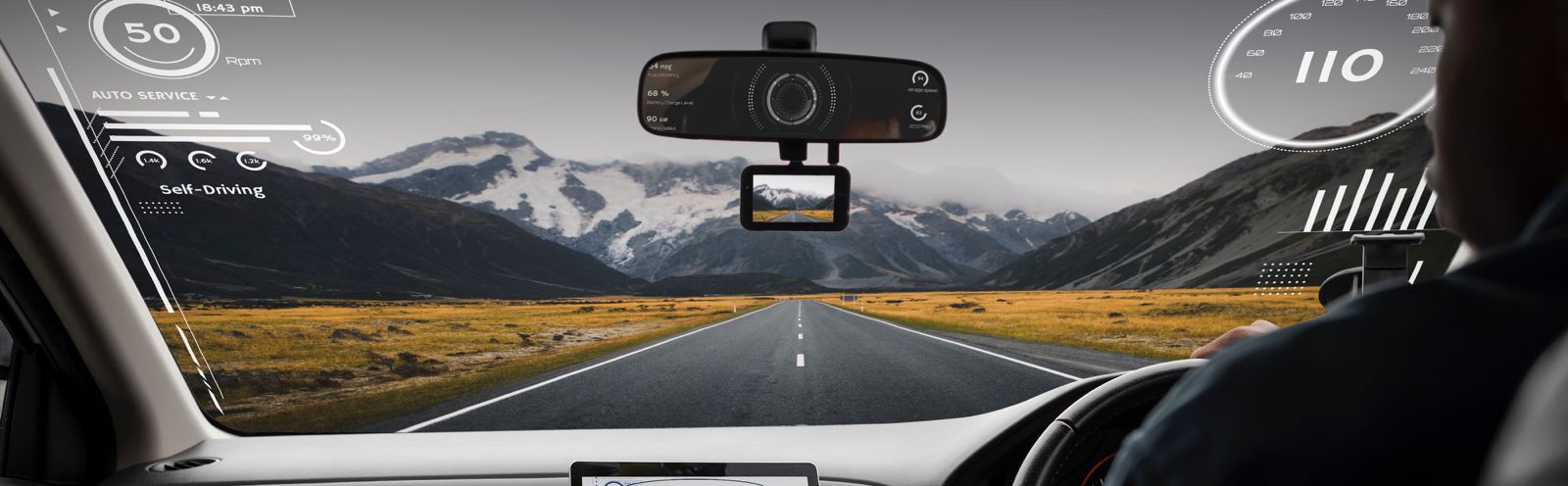
- Connected Vehicles: Deliver live speed limit data to in-car systems.
India may leapfrog straight to smartphone-led solutions. Apps like Attento show how real-time driver feedback and trip scoring can complement limited roadside enforcement.
Strategic Lessons for India
Global experience suggests several priorities for India:
- Context-sensitive limits: Adjust speeds for local traffic mixes, not just road design.
- Safe System adoption: Prioritize human injury thresholds in urban and high-pedestrian zones.
- Technology-enabled enforcement: Use digital tools and automated systems to boost compliance cost-effectively.
- Data-driven policymaking: Expand speed audits nationwide, linking crash data to regular adjustments.
The Future of Speed Management
Globally, speed limits are evolving from fixed numbers to adaptive systems shaped by data and conditions. For India, the challenge isn’t whether to raise or lower caps, but to make them smarter — reflecting road reality rather than road theory.
Success won’t be measured by higher speed ceilings but by lives saved. Smarter limits — enforced consistently and grounded in data — offer India its best chance to cut road deaths while keeping highways moving.